Обзор лучших индикаторов и DeFi-трекеров
Пространство децентрализованных финансов (DeFi) развивается стремительным темпом, даже несмотря на сильную просадку цены многих DeFi-токенов. Многие инвесторы следят за изменениями на рынке с помощью Coinmarketcap, однако это далеко не лучший трекер для сектора DeFi.
На сегодняшний день существует огромное количество индикаторов и сервисов для детального анализа DeFi-проектов. Причем все они публичные, просты в использовании и полностью бесплатные. DeFi-трекеры — это неотъемлемая часть каждого держателя криптовалют, поэтому предлагаем пройтись по всем индикаторам.
Общая заблокированная стоимость (Total Value Locked, TVL)
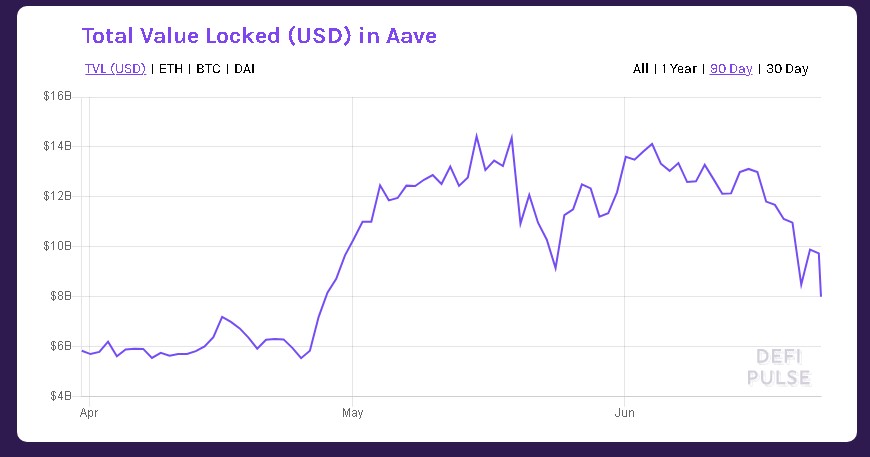
Наверное, TVL — это топовый индикатор, который говорит о том, сколько средств заблокировано в DeFi-протоколе.
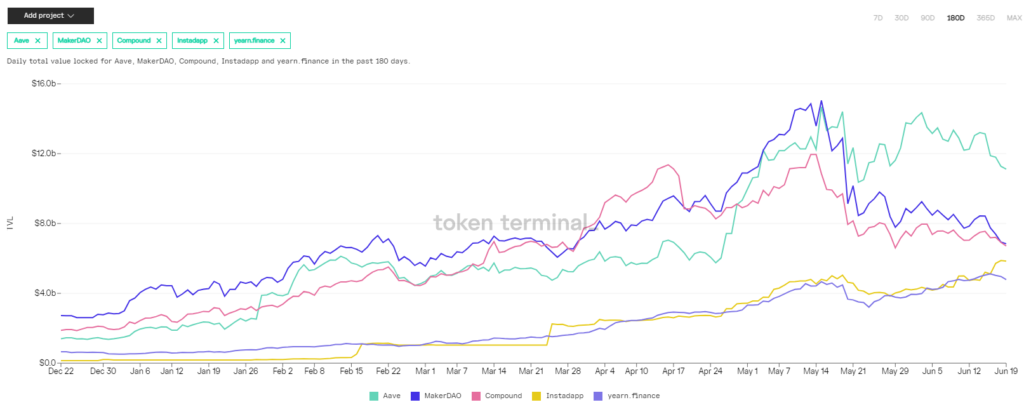
Также можно использовать трекер Token Terminal, который сопоставляет TVL разных DeFi-проектов.
Рыночная капитализация (Fully-Diluted Market Cap)
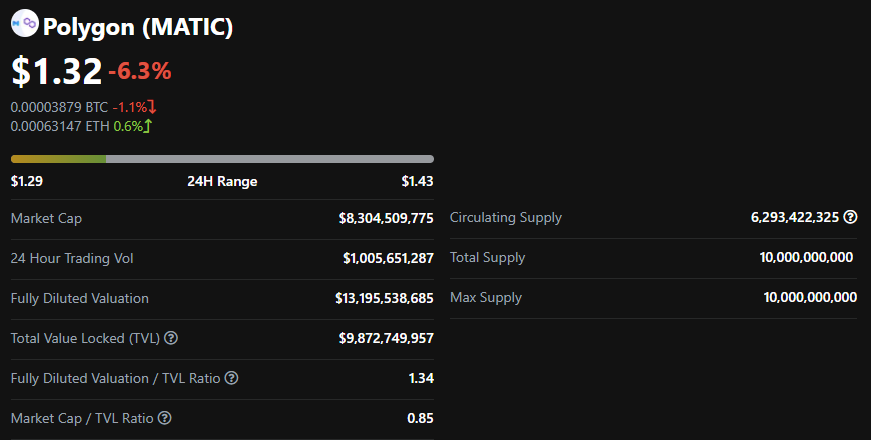
Это также популярный индикатор, означающий рыночную стоимость всех монет проекта. Исследовать проекты по капитализации лучше с помощью CoinGecko, в котором даже есть сопоставление TVL и капитализации.
Коэффициент цены/объема продаж (P/S Ratio)
Это индикатор из фондового рынка, который позволяет сравнить стоимость ценных бумаг компании с ее доходами.
Так как DeFi-проекты уже работают не один год и приносят доход своим создателям, данный индикатор можно применить. Рассчитывается он разделением капитализации на его годовой доход. Чем меньше показатель, тем лучше для проекта.
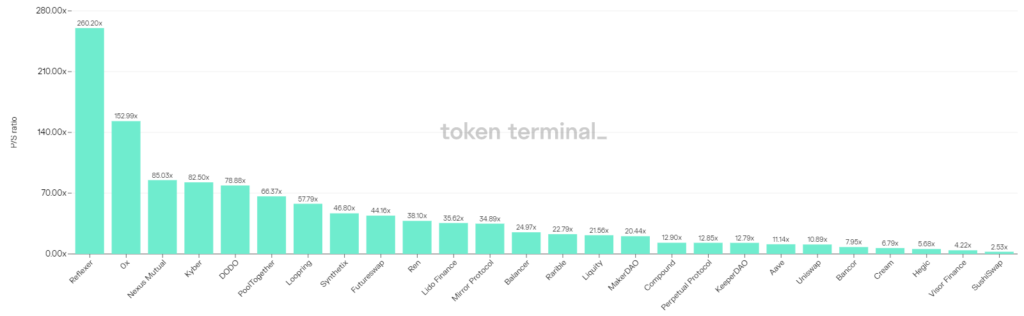
Доход проекта по следующим категориям: суммарный доход (генерируемый с комиссий за торги), доходы поставщиков ликвидности (говорит само за себя), доход протокола (сумма поступающая держателям монет).
Как утверждает команда разработчиков Token Terminal, чем ниже показатель коэффициента тем больше вероятность, что DeFi-проект недооценен.
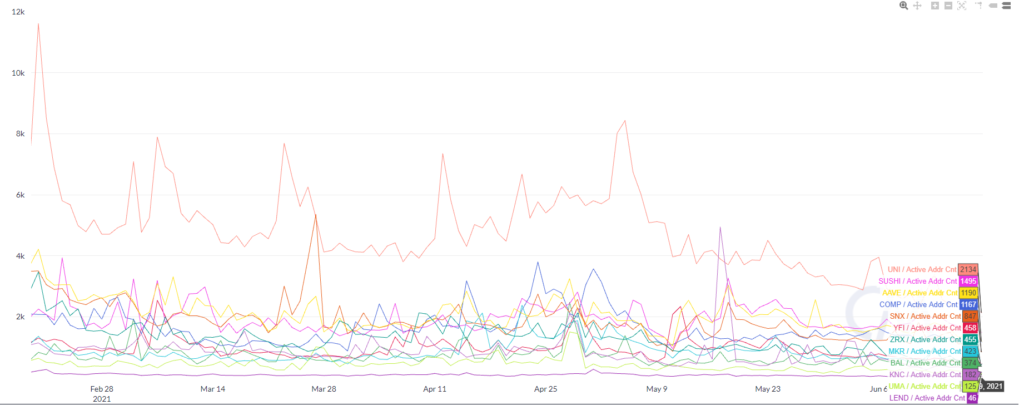
Число уникальных адресов
Если растет число адресов в сети того или иного DeFi-протокола, то значит растет и активность, а именно спрос на токен.
Однако нечестные проекты могут создавать сотни и даже тысячи фейковых адресов, чтобы участники рынка думали, что проект активный. Использовать этот индикатор стоит в последнюю очередь и в этом поможет платформа Dune Analytics, представляющая собой дашборд с динамикой новых адресов.
Объем торгов
Мы рекомендуем обращать внимание на объем торгов монетами в тандеме с рыночной капитализацией. Все очень просто — если если большой объем торгов, значит монета ликвидна, а это очень важно для любого проекта.
Gross merchandise volume (GMV)
Чтобы не быть многословными, данный индикатор отвечает на следующие вопросы:
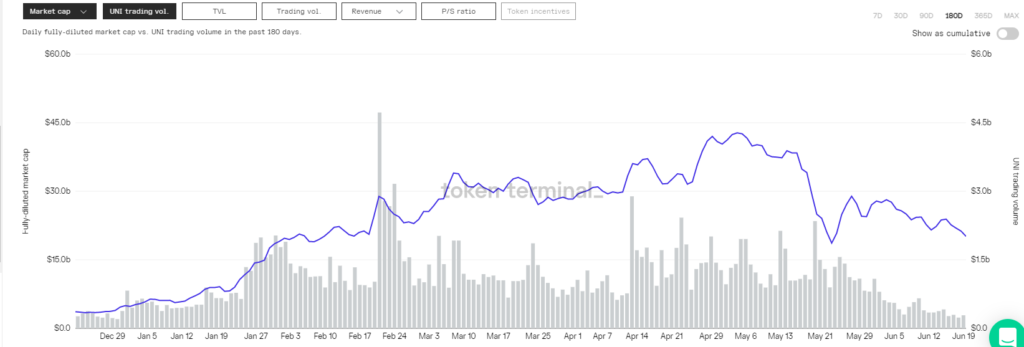
В большинстве случаев индикатор говорит об обороте на торговой платформы и объеме активов, которые прошли через депозиты и займы.
Подведем итоги
Мы рассмотрели наиболее важные индикаторы и DeFi-трекеры, с помощью которых можно провести фундаментальный анализ проекта. Рекомендуем использовать перечисленные индикаторы вместе. а не по отдельности. Так вы сможете составить картину по проекту, в который инвестируете, и сравнить его с ближайшими конкурентами.
Напомним, недавно мы рассказали почему институционалам проще разобраться с DeFi, чем с биткоином.
Что такое Fully Diluted captable?

В термшите и прочих подобных документах вы часто увидите термин «fully diluted valuation». Типичный слог, когда вы получаете оффер, в разделе про валюацию следующий:
Что это значит простым языком?
Речь о том, чтобы понять сколько всего будет акций в компании, когда она реализует все опционы сотрудников из ESOP, сконвертирует в акции все конвертируемые займы и варранты.
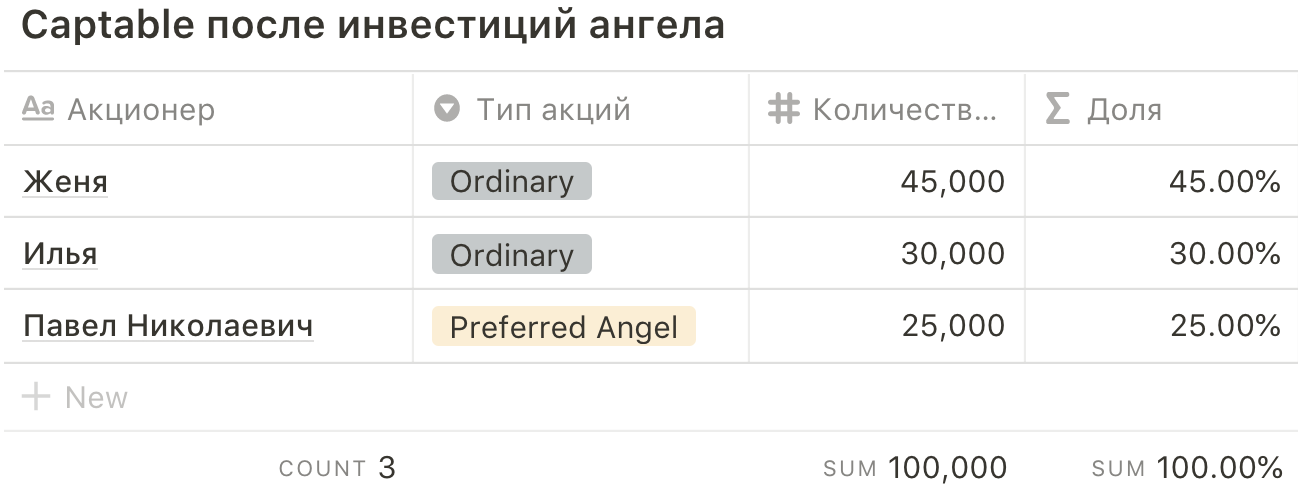 Первичный captable
Стартап потихоньку развивался на эти деньги и быстро нашел первую бизнес-модель.
Женя с Ильей решили выделить опцион своему программисту Олегу за его заслуги. Чтобы сразу заложить запас для опционов сотрудникам, они принимают решение авторизовать выпуск еще 10000 акций в опционный пул ESOP, естественно, получив при этом одобрение Павла Николаевича. При этом подчеркнем, что эти опционные акции обычно еще не существуют, они лишь одобрены для выпуска.
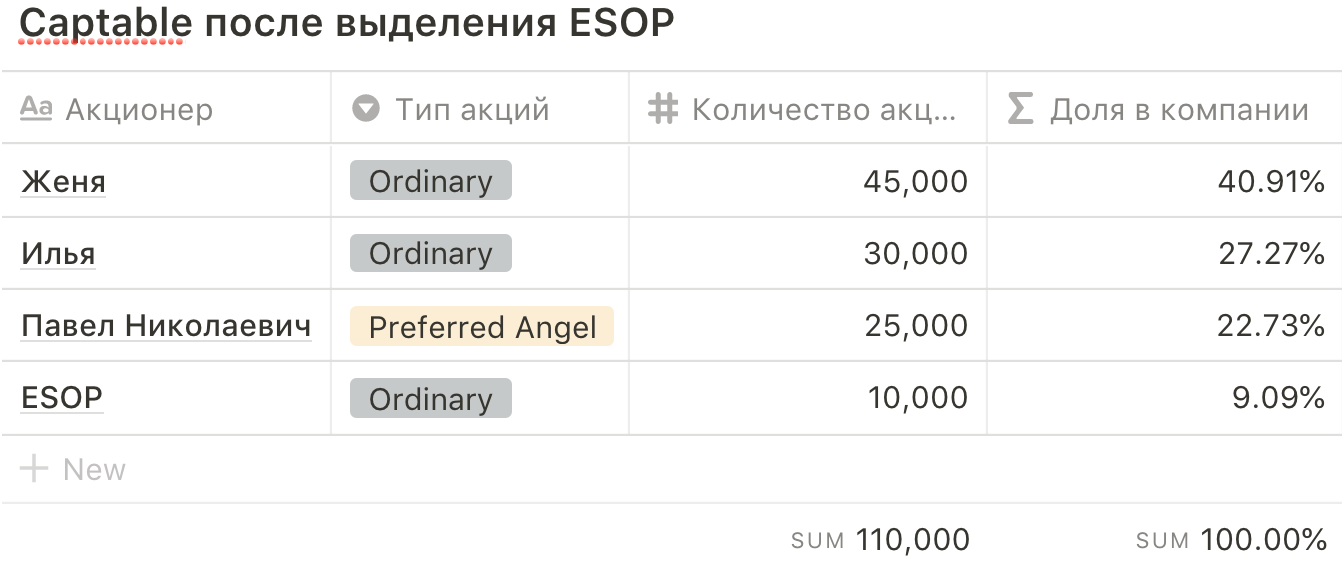
Итого теперь у компании 110,000 fully diluted акций, хотя еще существуют 100,000 акций. Таким образом, Женя, Илья и Павел Николаевич договорились о степени своего размытия, когда будут начислять опционы выдающимся сотрудникам. Теперь, давайте сделаем пример веселее: Олегу в итоге выделили опцион на 2500 акций (естественно, из ESOP):
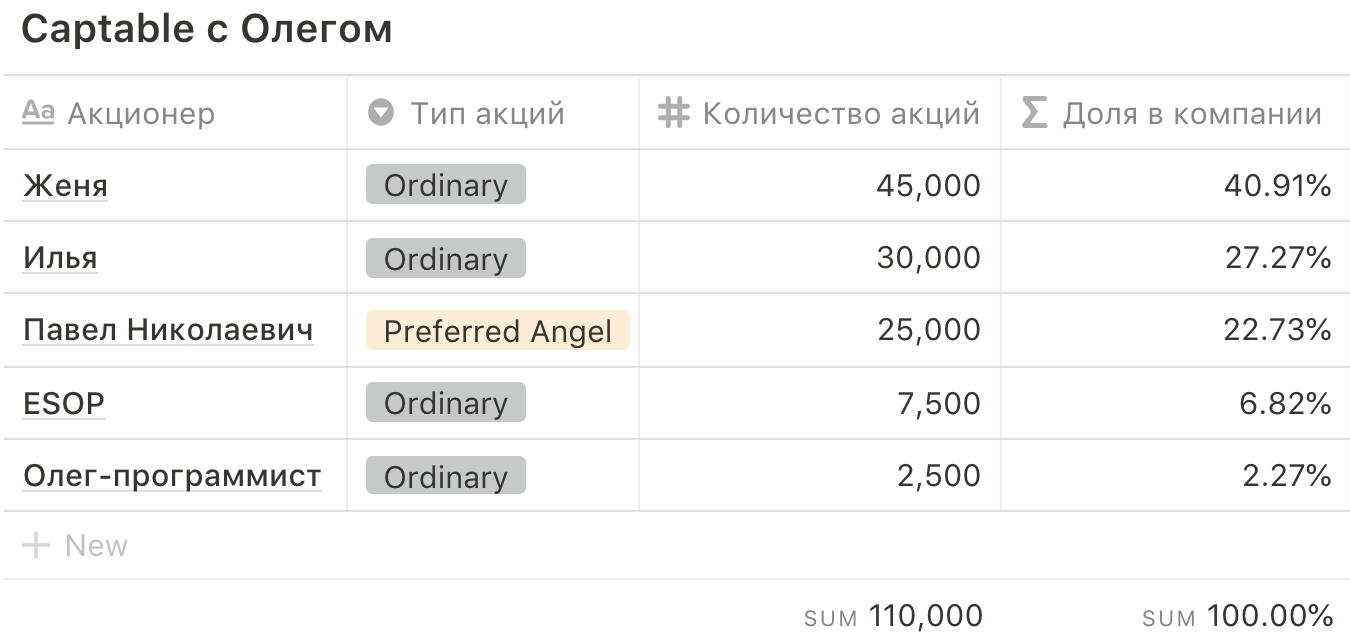
Таким образом, в fully diluted раскладе у Олега 2.27% компании.
Number of new shares = [Investment Amount] * [Current Fully Diluted Shares] / [Pre-money valuation], что в нашем случае:
$300,000 * 110,000 / 2,700,000 = 12,222 новых акций.
Таким образом новый captable будет выглядеть так:
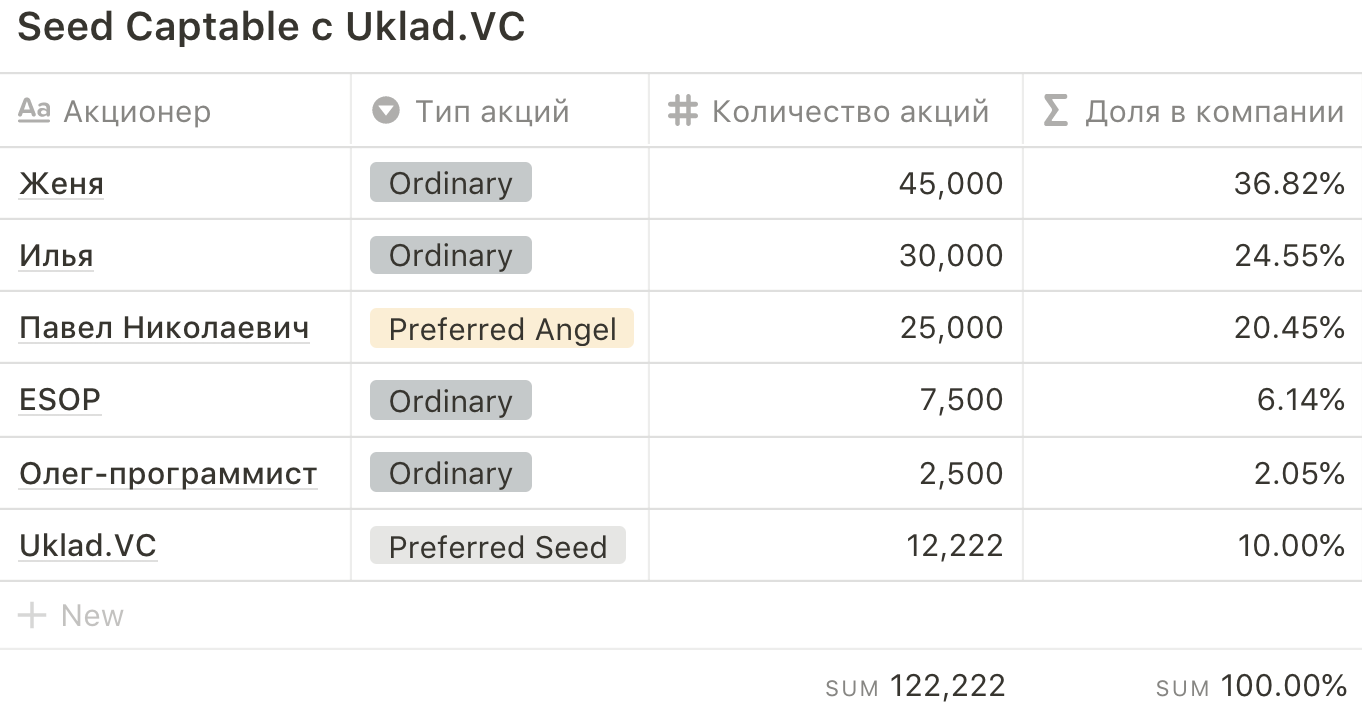
Подчеркнем, к примеру, что 2500 акций Олега никуда не делись, но теперь размылись с 2.27% до 2.05%. Размытие касается ВСЕХ предыдущих акционеров и ESOP.
Вывод
Понравилась статья? Отблагодари автора, расшарь ее в Facebook, так будет по понятиям. Подписывайся на канал:
Fully Diluted Market Capitalisation in Cryptocurrency

What is a fully diluted market cap vs a market cap?
Market capitalisation – or market cap for short – is defined as the total value of an asset currently in circulation. To calculate the market cap of a publicly traded company, for example, you multiply the current share price by the total number of shares outstanding.
In the case of cryptocurrency, market cap is calculated by multiplying the total number of circulating coins by the current value of one coin. Market cap is a useful metric when comparing the size of individual cryptos to alternatives or to the market as a whole.
Some investors view a larger market cap in crypto as a sign of buoyancy in tough markets, similar to the way large-cap stocks are viewed in downturns.
Another method of gaining insight into the potential future value of a crypto is to calculate what is referred to as the fully diluted market cap. So what does a fully diluted market cap mean?
The definition of a fully diluted market capitalisation is the total value of the crypto at today’s price if the entire future supply of coins were in circulation. Let’s take bitcoin (BTC) as an example.
Each time a bitcoin block is successfully mined, new coins are minted. At the time of writing, the number of bitcoins already mined and thus in circulation was approaching 18.8 million (as of 26 August 2021). The source code of bitcoin stipulates that the maximum number of coins that can ever be created will be capped at 21 million. In the case of bitcoin, the difference between market cap and fully diluted market cap is illustrated below.
Market cap and fully diluted market cap in crypto are often used to rank the relative popularity and importance to the overall market of particular coins, in much the same way as it is used to rank publicly traded companies.
While applying the fully diluted market cap can be quite useful when evaluating established cryptos, investors should use multiple metrics when determining the right crypto to invest in. A new coin could inflate its fully diluted value simply by allowing for a huge number of future coins.
In the same way as when a public company releases huge volumes of new stock, this will likely not lead to higher prices per unit, but will increase inflationary pressure on the coin, thereby causing the value per unit to decrease. Fully diluted market cap is useful in examining the total value of a crypto asset to itself over time, however.
Consider bitcoin, for example: while the supply has increased steadily to reach 18.8 million, the fully diluted market cap has increased substantially more in comparison to the increasing supply. This metric illustrates that investors feel the future value of bitcoin may increase rather than decrease.
What is Fully Diluted Valuation (FDV) in Cryptocurrency

There are a number of metrics that are used by crypto investors to understand tokenomics of a blockchain. These metrics include Trading Volume, Circulating Supply, Maximum Supply, Market Cap, etc. Another metric that is considered these days is Fully Diluted Valuation (FDV).
FDV can simply be defined as the Market Cap of the project once the maximum number of tokens have been issued by the development team. In other words, it is a method of computing the future market cap of a project.
All the cryptocurrency prices and market capitalization tools like Coingecko, Coinmarketcap shows the fully diluted valuation of a coin.
For example, in the below screenshot you could see the FDV of Filecoin:

FDV can be computed as follows:
FDV = Maximum supply of a token X Current market price of the token
In other words, FDV represents the future market cap of a project once all possible tokens have been issued provided the price of the token remains the same as of today.
How FDV is different from Market Cap?
Market Cap can be termed as the current market value of a blockchain project. This can be computed by multiplying the current price of the token with its circulating supply in the market.
Hence, Market Cap can be calculated as follows:
Market Cap = Circulating supply of a token X Current market price of the token
For Example: Let us consider ADA (the in-house token of the Cardano blockchain) for computation of its Market Cap and Fully Diluted Value (FDV).
Market Cap = 31,948,309,441 X USD 1 = USD 31,948,309,441
Fully Diluted Value (FDV) = 45,000,000,000 X USD 1 = USD 45,000,000,000
For more clarity, you may refer to the following table.
| Name of the Project | Token Name | Current Price | Circulating Supply | Maximum Supply | Market Cap | Fully Diluted Value (FDV) | Market Cap to FDV |
| A | B | C | D = A X B | E = A X C | F = D / E | ||
| Bitcoin | BTC | 55,044.71 | 18,665,687 | 21,000,000 | 1,027,447,242,702 | 1,155,938,814,186 | 88.88% |
| Cardano | ADA | 1.20 | 31,948,309,441 | 45,000,000,000 | 38,403,995,104 | 54,092,996,154 | 71.00% |
| Enjin Coin | ENJ | 2.32 | 834,313,757 | 1,000,000,000 | 1,932,080,728 | 2,315,772,349 | 83.43% |
| Kyber Network | KNC | 2.55 | 205,048,084 | 226,000,000 | 522,779,489 | 576,197,358 | 90.73% |
How reliable FDV is as a valuation parameter?
The basic problem with FDV is that it ignores the possible decrease in the price of a token with the eventual increase in its circulating supply.
This can be understood with the following example:
Suppose there is a token (let us call it ABC) that is valued at USD 100 and the circulating supply is 2 tokens with a maximum supply of 4 tokens.
Market Cap of ABC = 2 Tokens X USD 100 = USD 200

However, FDV will be as follows:
FDV (Future Market Cap) = 4 Tokens X USD 100 = USD 400

Therefore, FDV assumes that additional supply of the concerned token will not affect its price in the market and thus the market cap in the future will increase proportionally to the circulating supply at any given time.
Further, there are many other factors that are ignored by FDV while computing the future market cap of a project which may increase or decrease the value of the platform significantly, such as:
Therefore, in my understanding, FDV can not be considered a very reliable metric to evaluate a crypto project.
In the coming days I will share more factors that you should consider before you invest in a token. By mixing the FDV and Tokenomics of a coin/token will help you pick a winner.
If you find this guide on FDV useful, then do share it with your friends on Telegram and Twitter.
Harsh Agrawal is the Crypto exchange and bots expert for CoinSutra. He founded CoinSutra in 2016, and one of the industry’s most regarded professional blogger in the fin-tech space.
An award-winning blogger with a track record of 10+ years. He has a background in both finance and technology and holds professional qualifications in Information technology.
An international speaker and author who loves blockchain and crypto world.
After discovering about decentralized finance and with his background of Information technology, he made his mission to help others learn and get started with it via CoinSutra.
Join us via email and social channels to get the latest updates straight to your inbox.
Market Cap Vs. Fully Diluted Market Capitalization
Difference Between Market Value and Intrinsic Value
One of the most enjoyable things about financial markets is that they provide objective answers for basic investing questions such as «How much is that company worth?» The answer is, «Whatever people will pay for it.» The financial term for that is market capitalization, and you can measure it two ways: the regular way or the fully diluted way.
Shares of Stock
Corporations divvy up their ownership with shares of stock. Buy one share of Amalgamated Wig Corp., and you’re a partial owner of the company. If you own, say, 10 percent of the stock, then you own 10 percent of the company. Buy up 100 percent of the shares, and you own 100 percent of the company. Since you can buy the whole company for the combined price of all the shares of stock, that price must be the price for the company.
Market Cap Definition
Then again, if word gets out that you’re on the prowl for 100 percent of Amalgamated Wig shares and will stop at nothing to get them, people are going to buy shares to try to make a profit for themselves. This will drive up the price and the company’s market cap.
Market Cap and Impending Shares
The basic market capitalization formula multiplies the company’s market price by the number of outstanding shares. But many companies find themselves in a situation where the number of outstanding shares could suddenly rise. One such instance is when employees have stock options, which give them the opportunity to buy stock from the company at a certain price at a certain time. Some companies also issue convertible securities, such as bonds that can be converted to shares of stock.
Diluted Market Cap
Diluted Market Cap Significance
If the number of outstanding shares in a company were to quickly rise by 5 percent, as is the case with the Amalgamated Wig example, that might well push down the price of existing shares, unless there’s all sorts of pent-up demand for wig stocks. That suggests the fully diluted market cap might not be a terribly reliable figure for the company’s value. At the same time, the current price might already reflect the prospect that 500,000 new shares could soon flood the market, in which case the diluted cap would be accurate.
In the final analysis, fully diluted market cap can serve as something of a reality check. It prompts investors to examine how much the company is really worth.
More Articles
Is it Better to Sell Stock Before the Company Goes Bankrupt? →
Calculating Common Stock Value →
What Happens to a Shareholder When Delisting Occurs? →
Cam Merritt is a writer and editor specializing in business, personal finance and home design. He has contributed to USA Today, The Des Moines Register and Better Homes and Gardens»publications. Merritt has a journalism degree from Drake University and is pursuing an MBA from the University of Iowa.